
I am employed as a technical writer with Google, with extensive work on developer guides and documentation for privacy, security, authentication, measurement, and advertising. You can find my work primarily on the Android and Tag Manager developer sites.
My technical writing is primarily focused on software developer technologies and productivity. I’ve written about Android development, Kotlin, Java, CSS, JavaScript, Jetpack Compose, Credential Manager, passkeys, XML, XSLT, LilyPond, Google Tag Manager, user experience, information architecture, enterprise IT management, and related subjects.
Publications
- “Foundation Website Creation with HTML5, CSS3, and JavaScript”, 2012, Friends of ED, ISBN 978-1-4302-3789-1
- “Introduction to HTML5”, 2011, Sandia National Laboratories
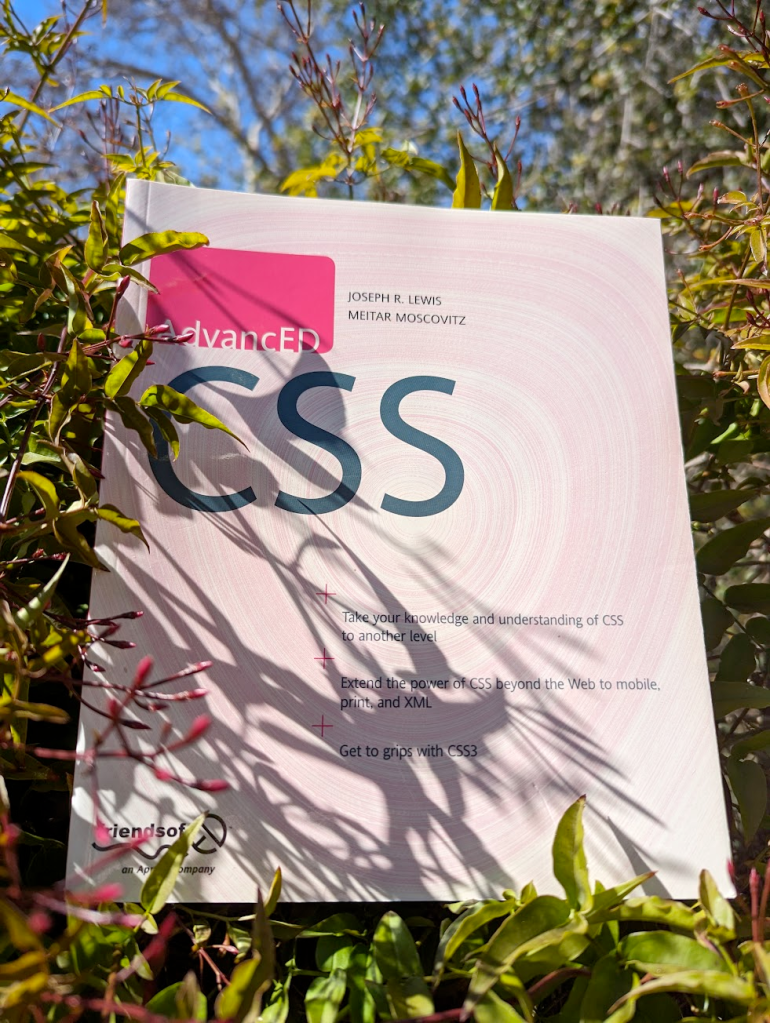
- “AdvancED CSS”, 2009, Friends of ED, ISBN 978-1-4302-1932-3
- “Foundation Website Creation with CSS, XHTML, and JavaScript”, 2008, Friends of ED, ISBN 978-1-4302-0991-1
- “Making the Business Case for Mobile”, 2012, Sandia National Laboratories, SAND# 2012-7223-J
Conference presentations
- “Effective Technical Writing”, Google, 4/2023
- “Cross-platform collaboration with the Privacy Sandbox”, Burning Pen, 10/2022
- “Introduction to HTML5 and CSS3”, InterLab Conference, 8/2013
- “Building a Social Intranet”, NLIT, 5/2013
- “Introduction to HTML5”, Sandia National Laboratories, 7/2012, 5/2013
- “Designing Responsively” Virtual InterLab, 4/2012; AnDevCon, Burlingame, California, 4/2012, Mobile + Web DevCon, San Francisco, 1/2013
- “Refactoring for Mobile” InterLab Conference, Golden, Colorado, 11/2011, OSCON, 8/2011, Open Web Camp III, 7/2011, iPhone DevCon, Boston, MA, 4/2011, AnDevCon, San Mateo, CA, 2/2011
- “Intro to HTML5 and CSS3” and “Refactoring for Mobile”, InterLab Conference, Oak Ridge, Tennessee, 11/2010
- “Refactoring for Mobile”, Open Web Camp II, Stanford University, 6/2010, InterLab Conference, Brookhaven National Laboratory, New York, 10/2009
- “Mobile Technologies in Science and Enterprise”, NLIT Conference, Brookhaven National Lab, New York, 5/2010
- “Wake up and smell the Semantic Web”, InterLab Conference, Livermore, California, 10/2008
- “Beyond HTML: Styling XML with CSS and XSLT”, InterLab Conference, Los Alamos, New Mexico, 10/2007
- “Standards-based CSS Strategies”, Los Alamos Web Developer Conference, Los Alamos, New Mexico, 4/2007
- “Semantic Markup and Search Engine Optimization”, InterLab Conference, Batavia, Illinois, 10/2006
- “Web Page Design—Aesthetics Meets Engineering”, 6th Intl. Conf. on Web Engineering, Stanford University, 2006
- “Designing with CSS”, InterLab Conference, Richland, Washington, 12/2005
-
Convert Textbook Vocabulary Lists to Pleco Flashcards
To learn Mandarin Chinese, I am using textbooks such as NTNU’s Course in Contemporary Chinese series and the Let’s Learn Mandarin series published by Taiwan’s Overseas Community Affairs Council. Because I’m such a diligent student with little free time, I’ve started using a Gemini prompt that speeds up importing my vocabulary lists in my Mandarin…
-
Work with Material 3 icons in Android Studio and Jetpack Compose
The Material Design system icon set contains UI elements you’d commonly encounter in an app, and Material 3 is the latest iteration. Material icons are a great resource for Android developers, and using these icons will save you from having to design the icons yourself and save your users from having to relearn new iconographic…
-
Easy Banana Bread, Gluten-Free
I have been making gluten free banana bread and it is freakin’ awesome. I started by using the cup4cup recipe, but things have evolved since then and I wanted to share my modified creation, because as I said it is freaking awesome. Ingredients * You can instead use 1 cup of sugar and skip the…
-
Android Reading Mode
I read through a lot of material on my phone and tablet, and I often find that distractions such as flashing ads, overlays, tiny fonts on similarly-hued backgrounds, rickety bus rides, and otherwise unreadable design choices or environmental conditions block my ability to read and understand the content. I recently wrote about how to use…
-
Functions in math vs programming
My coffee thought for this morning is that the fundamental concept of function in your calculus class is the same idea as a function in computer science. Basically, a function is a way of indicating a formula that can take input and produce output. To illustrate, here’s a basic example of a mathematical function: f(x)=x3…
-
Understand classes in Kotlin
In computer programming, we use classes to define templates for how to describe things. A class can represent a thing: A person, a chair, a bank account, a musical instrument, and so on. Each thing, or object, can have properties. For instance, a musical instrument can belong to a certain family: strings, woodwinds, brass, percussion,…
 San Bei Ji